
A whole set of dental implants can restore an entire arch of teeth with stable, natural‑feeling results. This guide explains what full arch dental implants are, who they help, the main treatment options, step‑by‑step care, costs, recovery, and how to pick the right team. Read on to learn what to expect and whether full mouth dental implants in Lilburn, GA, might be right for you.
What is a whole set of dental implants?
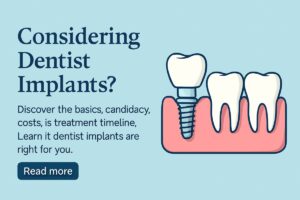
Full mouth dental implants replaces all teeth in the upper or lower jaw with dental implant posts, abutments, and a full‑arch prosthesis. Dental implants (titanium posts) are placed in the bone, abutments connect the posts to the prosthetic teeth, and the prosthesis is the visible set of teeth. Replacing one tooth uses one dental implant and tooth crown; a full‑arch solution uses several dental implants to support a dental bridge or denture that replaces many teeth at once.
Main options for full mouth dental implants
All‑On‑X (All‑On‑4 and similar)
All‑On‑X uses a small number of strategically placed dental implants to support a fixed full‑arch prosthesis. Pros: faster treatment, fewer dental implants, fixed (non‑removable) teeth. Cons: may not be ideal for severe bone loss and can be harder to clean under the dental bridge.
Full‑arch fixed bridge
A full‑arch fixed bridge uses more dental implants for greater stability and a feel closer to natural teeth. Pros: excellent function and esthetics. Cons: higher cost and longer treatment if more dental implants or grafting are required.
Implant‑retained overdenture
This option snaps a removable denture onto dental implants. Pros: lower cost, easier cleaning, and good stability. Cons: removable feel and may not match the function of a fixed dental bridge.
Who is a good candidate for a whole set of dental implants?
Good candidates are generally in good overall health, have healthy gums, and enough jawbone to support dental implants. Chronic conditions (uncontrolled diabetes), heavy smoking, or active gum disease can affect success. When bone is insufficient, grafting or sinus lifts may be needed before dental implants can be placed.
Step‑by‑step: What to expect during treatment
Consultation & planning
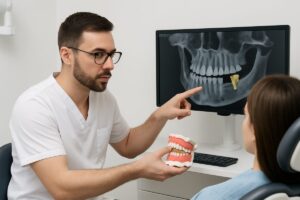
Expect a detailed exam, medical review, and 3D CBCT imaging to map bone and nerves. Your team will review options, timelines, and costs.
Surgery & immediate provisional teeth
Dental implants are placed surgically. Some patients receive temporary fixed teeth the same day. Robotic guidance may be used in practices that offer advanced surgical precision.
Healing and final restoration
Over a few months dental implants fuse to bone (osseointegration). After healing, your final prosthetic is fitted and adjusted for comfort and function. On‑site labs speed customization and fine tuning.
Recovery, risks, and long‑term maintenance
Expect swelling and mild discomfort for a few days, and a healing period of several months. Watch for infection, loose dental implants, or prosthesis issues. Daily care includes brushing, flossing around dental implants, and regular dental checkups to protect long‑term success.
Cost, financing, and what affects price
Costs vary by number of dental implants, need for bone grafting or sinus lifts, materials, and lab work. Financing plans and payment options can help. Most medical or dental insurance covers parts of treatment, but full coverage is uncommon.
How to choose the right team for a whole set of dental implants
Choose board‑certified specialists who use CBCT planning and offer clear treatment plans, patient reviews, and an on‑site lab. Technology like robotic guidance and an in‑house master lab improve precision and turnaround.
Enhance your smile with full mouth dental implants
Gwinnett Dental Implant Center in Lilburn, GA offers board‑certified periodontists, Yomi robotic‑guided implant surgery, CBCT planning, and an in‑house master lab for custom restorations. To learn if a whole set of dental implants in Lilburn, GA is right for you, contact us to schedule a consultation to review goals, options, and a personalized plan.