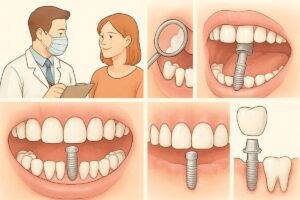
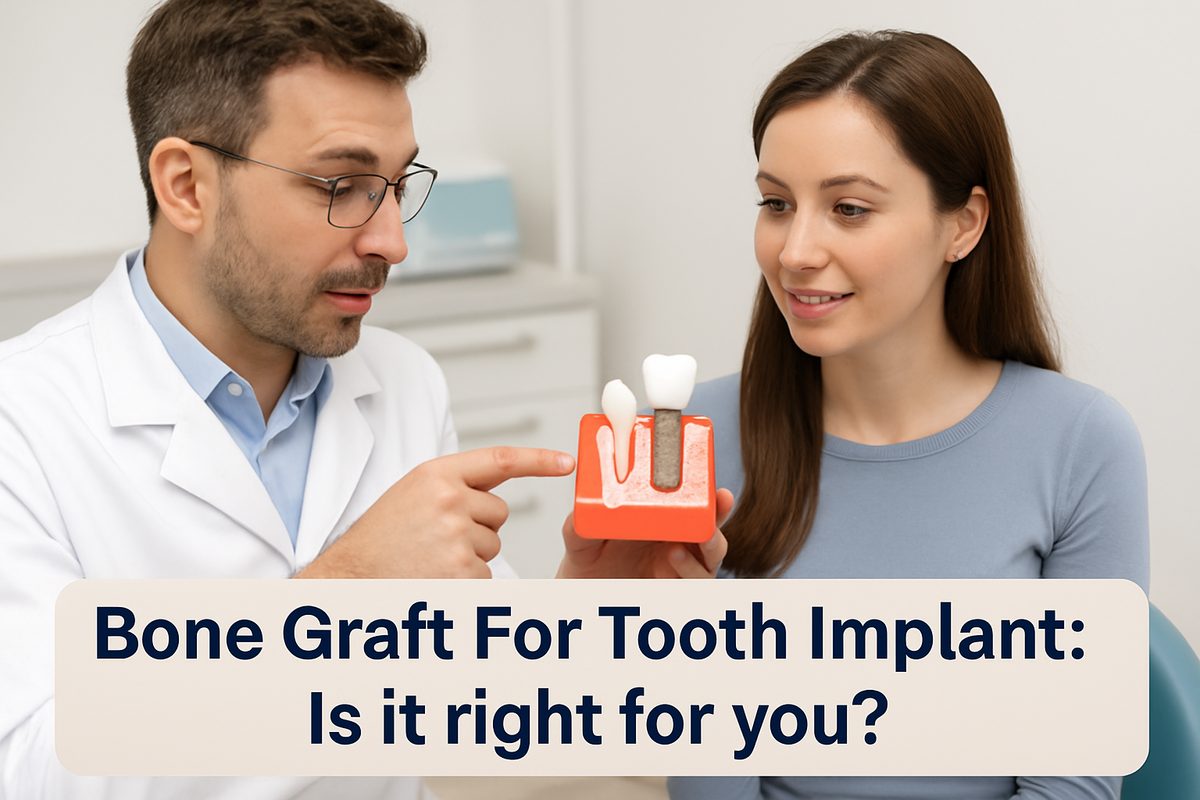
A bone graft for tooth implant is a procedure that adds bone to your jaw so a dental implant has enough support. Many patients ask if a graft is always needed because implants work best when there is enough healthy bone. This article explains why grafting is used, the common types of grafts, when you may need one, what the procedure and recovery look like, alternatives that may avoid grafting, and how Gwinnett Dental Implant Center evaluates and treats grafts. By the end, you’ll know when a bone graft for a tooth implant is needed and what to expect next.
Why are bone grafts used with implants
When a tooth is lost, the jawbone can shrink over time. Infection or periodontal disease also destroys bone. An implant requires sufficient bone volume and density to remain stable in the long term. A bone graft for tooth implant reconstruction rebuilds the ridge, raises the sinus floor if necessary, or fills defects so that the implant can integrate (fuse) with the jaw. Without enough bone, an implant may fail or look uneven.
Common types of bone grafts for tooth implants
Autograft (patient’s own bone)
Autografts use bone taken from another site in your body, often the chin or hip. They offer excellent healing and integration because the bone is live tissue. Downside: extra surgery and more recovery time.
Allograft (donor human bone)
Allografts come from screened human donors. They avoid a second surgical site and heal well, though integration can be slower than autograft. They are commonly used for many implant cases.
Xenograft and synthetic grafts
Xenografts typically use animal bone (usually bovine), while synthetic grafts are laboratory-made materials. Both act as scaffolds for new bone to grow into. They avoid donor issues but may take longer to fully replace with your own bone. Choice depends on defect size, location, and patient preference.
When a bone graft for a tooth implant is necessary
Grafting is likely when imaging shows a thin or short jawbone on a CBCT, particularly when a tooth has been missing for a long time, after periodontal bone loss, or when the sinus is too close to the planned implant site. Sometimes a graft is placed months before the implant; other times a graft and implant are done at the same visit if primary stability can be achieved. Your CBCT scan and exam determine the timing and type.
What to expect during the graft procedure and recovery
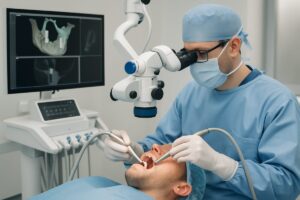
Expect an evaluation with 3D CBCT imaging, a treatment plan, and a discussion of anesthesia options. During grafting, the area is numbed or sedated, bone material is placed, and it is covered with a membrane or sutures. Healing usually takes several months for new bone to form before the implant is placed; however, simultaneous placement can shorten the overall time in some cases. Mild swelling and discomfort are common; antibiotics and pain control help. Success rates are high when procedures are performed by experienced providers and oral hygiene is maintained. Risks include infection, graft failure, or prolonged healing; however, careful planning can help mitigate these.
Alternatives and ways to avoid a graft
In some cases, narrow or short implants, angled implants, or zygomatic implants (for the upper jaw) can avoid extensive grafting. All-on-X full-arch strategies may utilize strategic implant placement to minimize graft requirements. Each alternative has trade-offs in terms of long-term support and aesthetics, so decisions are made on an individualized basis.
How Gwinnett Dental Implant Center evaluates and treats bone grafts
Gwinnett Dental Implant Center uses CBCT imaging and a team approach to plan grafts and implants. The practice pairs board-certified periodontists and an oral surgeon with Yomi robotic guidance when appropriate and an on-site lab for restorations. This coordinated care aims to give predictable outcomes, clear timelines, and financing options for patients.
Conclusion and next steps
A bone graft for a tooth implant is not always required, but it is often recommended when bone is insufficient for long-term implant support. The best way to determine this is through a CBCT evaluation and consultation. If you’re considering implants, schedule a review to determine whether grafting is necessary and to discuss your timeline.